
 +31 43 60 43 797
Why Substrate Is the Decisive Factor in Selecting Acrylic Foam Tape
When selecting the right acrylic foam tape for a bonding application, the substrate should be your first and foremost consideration. Whether you're working with aluminum, plastics, composites or glass, understanding the characteristics of the substrate is key to ensuring long-term adhesive performance and structural integrity.
What Is a Substrate?
A substrate is the material surface to which a tape is applied. In manufacturing and design, common substrates include metals, plastics, painted surfaces and glass. Each substrate type differs in surface energy, porosity and chemical composition, factors that directly affect how well an adhesive will perform.
Substrate Selection for Bonding Applications
The success of any tape bonding process depends on compatibility between the adhesive and the substrate. Acrylic foam tapes are engineered to provide strong adhesion, stress dissipation and resistance to environmental influences. However, using the wrong tape for a specific substrate can lead to edge lifting, bond failure or degradation over time.
Surface tension and Adhesive Compatibility
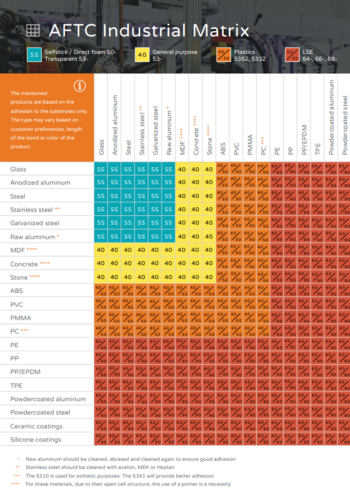
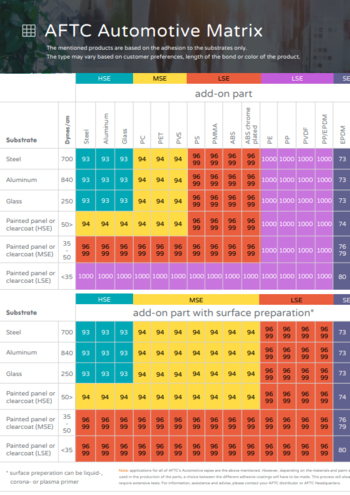
Surface tension plays a vital role in determining how well an adhesive "wets out" a substrate. High surface energy substrates (like stainless steel or glass) promote strong bonds, while low surface energy materials (like polyethylene or polypropylene) often require primers or specially formulated adhesives.
Examples:
- High Surface Energy (HSE): aluminum, steel, glass - ideal for general-purpose acrylic foam tape or Self Stick with a primer.
- Medium Surface Energy (MSE): ABS, PVC, PMMA, PC – General Purpose with a primer.
- Low Surface Energy (LSE): polypropylene, TPE, powder-coated surfaces - requires LSE-compatible adhesive formulations, such as Primerless or General Purpose with a primer.
⚠️ Note: These classifications are indicative, not definitive. Surface tension can vary significantly even within the same material type due to differences in formulation, additives, coatings or suppliers. Therefore, a technical consultation with AFTC is always advised before selecting a specific tape.
Preparing the Substrate: A Crucial Step
Even with a high-performance tape, a poorly prepared surface can ruin the bond. Proper surface cleaning, degreasing and, if needed, abrasion or priming are essential steps in any substrate preparation process. This becomes even more critical in applications involving dynamic loads or exposure to UV and moisture.
Matching Tape Type to Substrate Requirements
Not all acrylic foam tapes perform equally across different substrates. It is essential to select a tape formulation that matches the substrate's surface energy and application conditions. For example:
- High surface energy materials such as glass or metal typically require standard acrylic adhesives
- Low surface energy substrates like polypropylene or powder-coated parts demand tapes with specially engineered adhesive systems
- Painted or clear-coated surfaces may need testing to confirm chemical compatibility and prevent long-term delamination
⚠️ Note: Not only surface tension, but also the polarity of the substrate influences how well an adhesive can wet out and bond.
To ensure the right match, we recommend contacting our AFTC technical specialists to evaluate tapes based on substrate type, mechanical load and environmental exposure. Thereby, ensuring you receive a bonding solution that is entirely tailored to your requirements.
Conclusion
In any adhesive application, the substrate isn’t just a variable, it’s the foundation of your bonding system. Understanding substrate properties, surface energy and environmental exposure is essential for choosing the right acrylic foam tape. Proper substrate selection ensures performance, safety and durability across the product lifecycle.
Need expert advice on substrate-specific tape selection?
Try our Tape Selector Tool, Contact us to validate performance on your materials.

CHECK OUT OUR BROCHURES AND DATASHEETS

HOW MAY WE
HELP YOU?
Please feel free to contact your own AFTC® sales representative who can direct you to one of our network partners or contact us directly.