
 +31 43 60 43 797
Selecting the Right Tape Thickness for Uneven Surfaces
Understanding the 50% Rule for Optimal Bonding
When working with acrylic foam tape for industrial or construction applications, selecting the appropriate thickness is crucial for ensuring strong, long-lasting bonds—especially when dealing with textured or uneven surfaces. Following the 50% rule provides a reliable method for calculating the minimum tape thickness required for your specific application.
What is the 50% Rule?
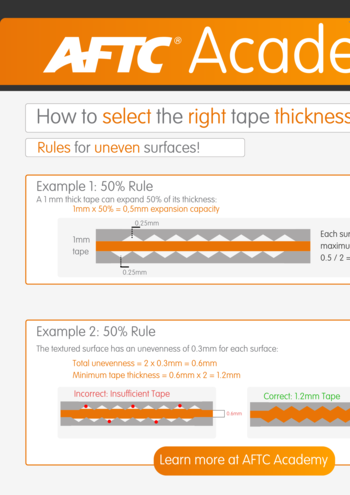
The 50% rule states that acrylic foam tape can effectively expand up to 50% of its original thickness to fill gaps and accommodate surface irregularities. This expansion capacity is what allows the tape to create proper contact with uneven surfaces, ensuring maximum adhesion across the entire bonding area.
How to Apply the 50% Rule
Step 1: Assess Your Surfaces
First, determine the degree of unevenness on each surface you plan to bond. This can be measured using surface profile gauges or similar instruments.
Step 2: Calculate Total Unevenness
Add the maximum unevenness measurements from both surfaces to get the total unevenness value.
Step 3: Apply the 50% Rule Formula
To determine the minimum tape thickness required, multiply the total unevenness by 2 (which represents 50% of the expansion capacity).
Practical Examples
Example 1: Minimal Surface Texture
When working with a 1mm thick tape:The tape can expand by 50% of its thickness: 1mm × 50% = 0.5mm
With two surfaces to bond, each surface can have maximum unevenness of: 0.5mm ÷ 2 = 0.25mm per surface
Example 2: Moderate Surface Texture
When each surface has 0.3mm of unevenness:Total unevenness = 2 × 0.3mm = 0.6mm
Minimum tape thickness required = 0.6mm × 2 = 1.2mm
Common Mistakes to Avoid
Underestimating Surface Irregularities: Always measure rather than guess the degree of texture or unevenness.
Using Insufficient Tape Thickness: This leads to inadequate contact between surfaces, resulting in weak bonds and potential failure.
Ignoring Temperature Fluctuations: Remember that different materials expand and contract at different rates with temperature changes, which can further stress adhesive bonds.
Benefits of Proper Tape Thickness Selection
Enhanced Bond Strength: Maximizes contact area between the adhesive and both surfaces
Improved Durability: Accommodates minor movements and vibrations without bond failure
Better Stress Distribution: Evenly distributes forces across the entire bonding area
Increased Weather Resistance: Properly filled gaps prevent moisture ingress and environmental damage
By following the 50% rule and selecting the appropriate tape thickness for your specific application, you can ensure optimal bonding performance even on challenging uneven surfaces, saving time and resources on repairs or replacements down the line.

CHECK OUT OUR BROCHURES AND DATASHEETS

HOW MAY WE
HELP YOU?
Please feel free to contact your own AFTC® sales representative who can direct you to one of our network partners or contact us directly.